The Future of Japan: Where Tradition Meets Innovation – See It For Yourself!
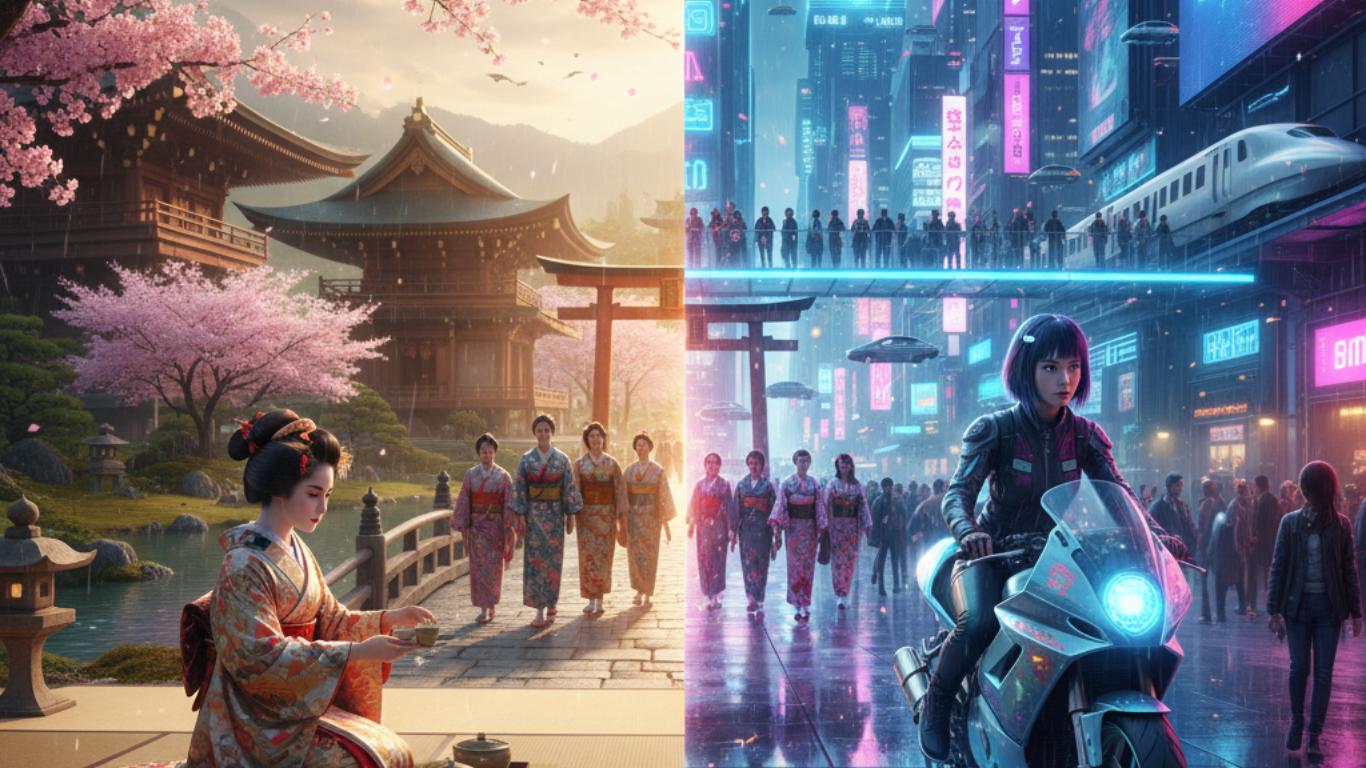
Hello, time traveler! Japan isn’t just a country – it’s a living time machine riding a Shinkansen while wearing a kimono. On one side, 1,300-year-old temples welcome visitors at sunrise; on the other, robots greet you at hotel receptions. Japan’s future doesn’t replace the past – it blends with it. Come and witness how tradition and innovation embrace in every corner!
Temples That Glow with LED
Imagine Kiyomizu-dera in Kyoto: a 17th-century wooden roof, but at night it’s illuminated with smart LED lights that change colors with the seasons – sakura pink in spring, maple red in autumn. At Fushimi Inari, the thousand red torii gates now include QR codes: scan them for audio guides in 10 languages. The traditions of prayer remain, but access has become inclusive. On New Year’s Eve, Meiji Jingu Shrine uses a drone light show to draw zodiac animals in the sky – thousands of people look upward, not just at the temple bell.
Kimonos That Can Charge Your Phone
In Asakusa, the traditional shop Kimonoya sells yukata made with smart woven fabric: carbon fiber inside works as a power bank. Plug in a USB cable, and your phone charges while you walk. There’s also AR kimonos: use an app and sakura blossoms “bloom” across the fabric when photographed. A fifth-generation tailor says, “We are not afraid of technology – we invite it to dance with us.”
Matsuri Festivals with Taiko Robots
Each summer, Awa Odori in Tokushima still features thousands of street dancers. But now there’s a spectacular addition: a 2-meter-tall taiko robot beating giant drums with perfect rhythm. Created by Osaka University, it learns from human taiko masters with AI. The audience? A mix of grandmothers in yukata and teens wearing VR glasses. The result: the tradition stays alive but becomes more inclusive – seniors who can’t drum physically can now “perform” through the robot.
Traditional Houses That Are Zero-Waste
In Kanazawa, a 200-year-old machiya townhouse has been renovated into a traditional smart home. The tiled roof stays, but inside:
Solar panels hidden under the tiles.
Tatami mats with sensors that detect if an elderly resident falls, sending alerts to family.
A modern composter in a tiny garden turning food waste into fertilizer for green tea plants.
The owner says, “My grandfather built this house to withstand earthquakes. We added technology to withstand time.”
Old-Style Trains That Travel Into the Future
The Banetsu Monogatari steam locomotive – 100 years old – still runs in Niigata. Now it’s pulled by a hybrid engine: steam for nostalgia, electric power for efficiency. Inside wooden carriages, there are USB-C charging ports and 5G Wi-Fi. The rice fields outside look like the 1950s, but you can live-stream them to Instagram.
Why Does This Blend Exist Only in Japan?
The Japanese embrace wabi-sabi (beauty in imperfection) and kaizen (continuous improvement). They don’t throw away tradition – they upgrade it. The result: temples are lively because young people visit for AR photos, festivals survive because robots join the rhythm, and kimonos stay relevant because they can charge your phone.
Japan is living proof that the future doesn’t need to be cold and sterile. It can be as warm as tatami floors, as fragrant as ceremonial tea, and as advanced as a bowing robot.
So, book your flight – the future is waiting at the next station, with a temple bell as its soundtrack.