5 Adventure Destinations in Japan Beyond Mount Fuji
For adventure seekers, climbing Mount Fuji is one of Japan’s most popular tourist activities. Every summer, the iconic mountain sees 200,000 to 300,000 visitors, according to the Japan National Tourism Organization.
Due to overtourism, the Japanese government now limits the number of climbers to 4,000 per day, with an entrance fee of 2,000 yen (~USD 15–16 / IDR 213,000).
But don’t worry—Japan offers plenty of other thrilling destinations for adventurers. Here are five alternative adventure spots that will ignite your spirit of exploration:
1. Ryusendo Cave
If you love exploring caves, Ryusendo Cave is a must-visit. It is one of Japan’s three largest limestone caves, stretching over 4,000 meters, although visitors can explore up to 700 meters.
The cave is famous for its stalactites and underground lakes. In winter, when the surface water freezes, the underground lakes appear crystal-clear and enchanting.
How to Get There:
Located in Iwaizumi, Iwate Prefecture
Take the Tohoku Shinkansen from Tokyo to Morioka Station, then JR Bus to Ryusendo Cave.
Open 08:30–17:00, entrance fee 1,100 yen (~IDR 117,000)
2. Shimoguri no Sato
For a unique mountain village experience, visit Shimoguri no Sato, located on a steep 30-degree slope at 1,000 meters elevation. Here, you can enjoy spectacular village scenery and observe local farming practices.
Visiting requires a local guide, booked at least 14 days in advance, with a tour fee of 3,000 yen for a 2-hour tour for up to 20 people.
How to Get There:
Located in Iida, Nagano Prefecture
Take a bus from JR Nagoya Station to JR Lida Station, then a local bus to Kamimachi Stop. From there, a 15-minute taxi ride leads to Shimoguri no Sato.
3. Fukiware Falls
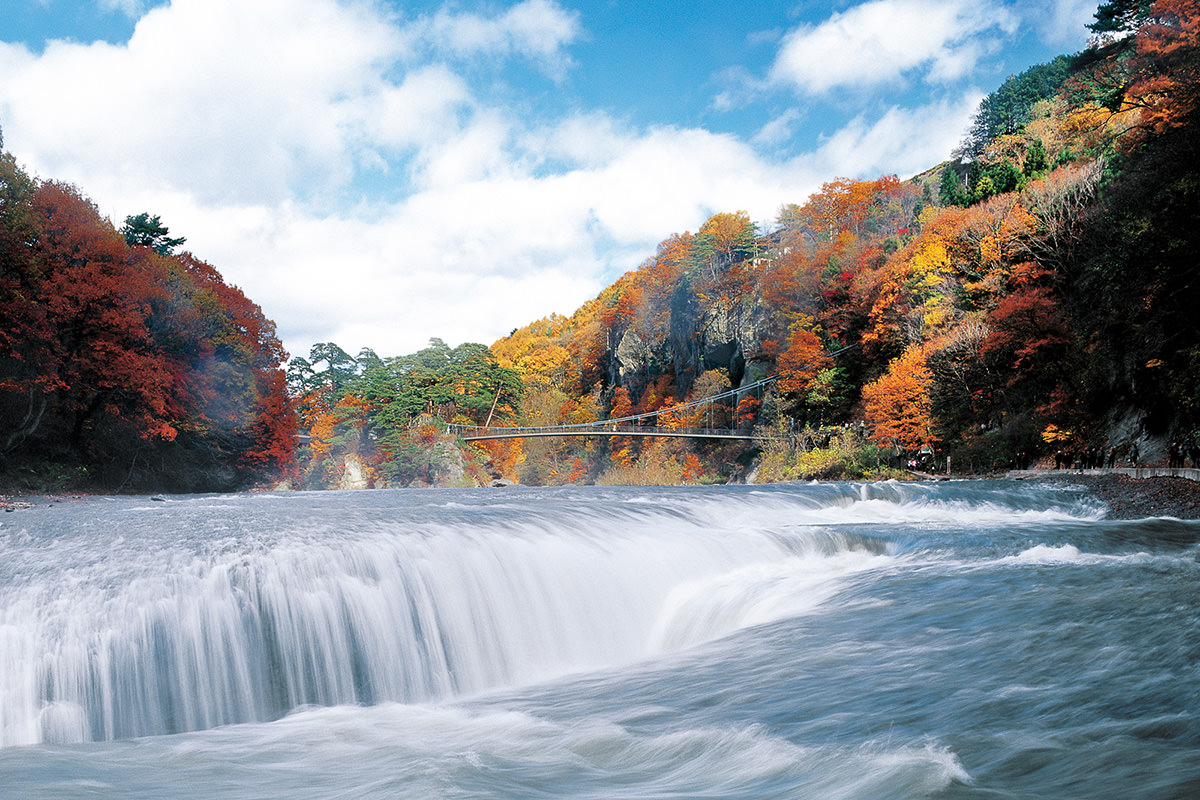
Known as the “Niagara of Japan,” Fukiware Falls in Numata, Gunma Prefecture, is famous for its 7-meter-high, 30-meter-wide cascade that flows into a narrow river gap. The site is a national natural monument and part of Japan’s Top 100 Waterfalls.
Visitors can enjoy lush greenery, autumn foliage, and river trails, as well as a suspension bridge and Hannya Rocks cliff trails.
How to Get There:
From Tokyo, take the JR Joetsu Shinkansen to Jomo-Kogen Station
Then take the Oze Tokura bus line to Fukiware no Taki Stop, followed by a short walk
Free entry, closed in winter (Dec–Mar)
4. Aogashima Island
Aogashima Island is a remote volcanic island in the Philippine Sea, about 358 km from Tokyo, administratively part of Tokyo Prefecture. The island features Mount Maruyama, an active volcano ideal for adventurous hikes.
Accommodations are limited to small lodges or camping areas, with a resident population of just over 100 people.
How to Get There:
Fly from Tokyo to Hachijo-jima Airport, then take the Tokyo Ai-Land Shuttle helicopter to Aogashima (book at least 1 month in advance)
Helicopter fare: 12,000 yen (~IDR 1,276,000) one-way
No entrance fee required
5. Takeda Castle Ruins
Known as the “Machu Picchu of Japan,” Takeda Castle sits atop a mountain in Asago, Hyogo Prefecture, 70 km from Himeji. Originally built in 1441, it was destroyed in 1600 and later restored in the 1970s–80s as a historic site.
Early morning fog creates the illusion of the castle floating in the clouds, offering a magical view.
How to Get There:
Take the Tokaido Shinkansen from Tokyo, transfer at Himeji Station, then JR Bantan Line to Takeda Station
From Takeda Station, take the Tenku bus to Takedajo-seki Stop, then a 20-minute walk
Open 08:00–18:00 (winter 10:00–14:00), entrance fee 500 yen (~IDR 53,000)
These five destinations are located far from city centers, making them perfect for travelers seeking adventure, nature, and unique experiences in Japan.