Byodoin Temple: A Mesmerizing World Heritage in Kyoto
Kyoto, often called the city of a thousand temples, is home to countless historical treasures. Among them, one stands out for its sublime beauty and deep spiritual meaning—Byodoin Temple.
Originally built in 998 by Fujiwara no Michinaga, a powerful regent of the Heian period, Byodoin was not initially a temple. It began as a luxurious villa surrounded by serene waters and lush scenery. Later, Michinaga’s son, Fujiwara no Yorimichi, transformed the residence into a temple dedicated to the Pure Land Paradise of Buddhism—a symbolic representation of celestial peace and harmony.
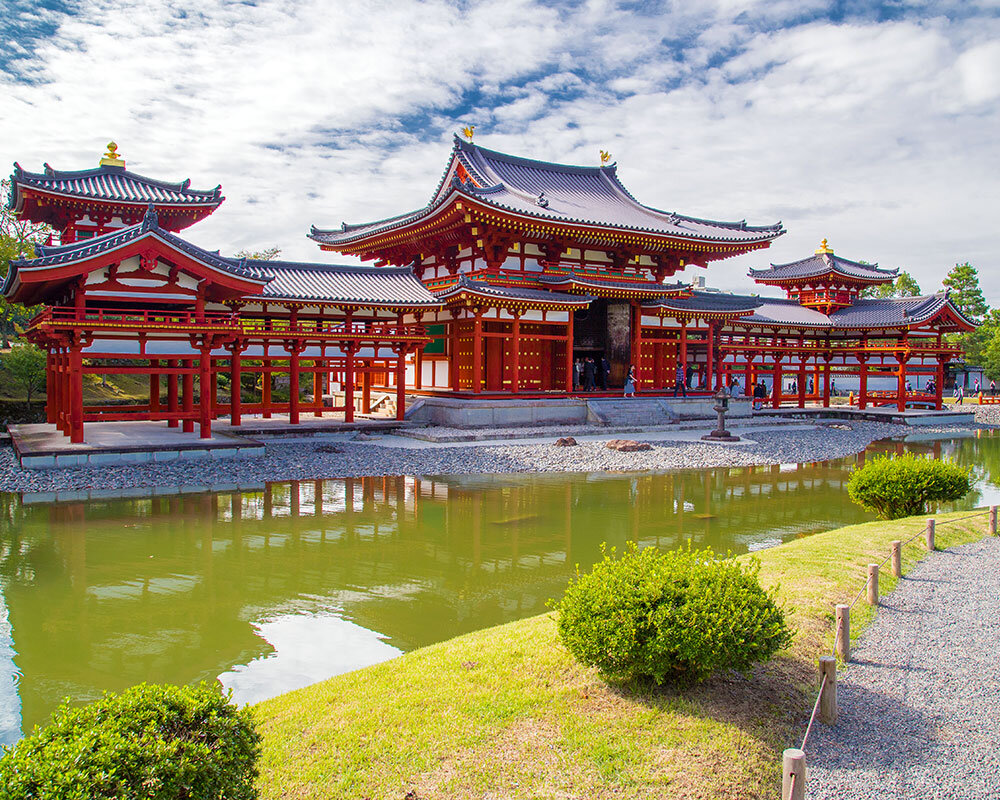
The temple’s most iconic structure, the Phoenix Hall (Hoodo), was completed in 1053. Its name comes from the building’s shape, which resembles a phoenix with outstretched wings, and the two bronze phoenix statues adorning its roof. Despite fires and natural disasters throughout the centuries, the Phoenix Hall has miraculously survived intact, making it one of the few remaining original wooden buildings from the Heian era.
Visitors today can explore the Phoenix Hall on short guided tours (in Japanese), offered every 20 minutes for an additional 300 yen. Inside, you’ll find a magnificent statue of Amida Buddha, radiating calmness and divine light.
The Byodoin Museum
The Byodoin Treasure House (Hoshokan) is a remarkable underground museum designed not to disrupt the temple’s scenic harmony. It exhibits priceless artifacts and cultural properties, including national treasures that trace the temple’s long and rich history.
Multilingual displays provide insights into Byodoin’s architecture and its role as a spiritual and artistic masterpiece.
What to See Inside Byodoin Temple
1. Phoenix Hall (Hoodo)
This national treasure is the heart of Byodoin. Built in 1053, it still retains its original Heian-period form. The hall was once considered one of the grandest constructions of its time and even appears on Japan’s 10-yen coin.
Reflected perfectly in the pond that surrounds it, the Phoenix Hall creates a heavenly image of the Pure Land itself. Inside are paintings of Amida Nyorai (Amida Buddha) and 52 Bodhisattva statues, visible only upon special request.
Entry to the Phoenix Hall is available from 9:30 a.m. to 4:10 p.m. local time.
2. Byodoin Temple Garden
Encircling the Phoenix Hall, the Byodoin Garden is a classic Jodo-style landscape, representing the Buddhist concept of the Pure Land. Its central pond, Aji-ike, mirrors the celestial lake Hochi described in Pure Land teachings.
Recognized by the Japanese government as both a Historic and Scenic Beauty Site, this garden is also regarded as the oldest surviving Jodo Garden in Japan.
Each season offers a new kind of beauty—cherry blossoms and wisteria in spring, lotus flowers in summer, and vibrant red maples in autumn.
3. The Lawn of the Fan
Located near the main gate, this grassy area is shaped like an open fan—a tribute to a tragic legend. According to history, Minamoto no Yorimasa, who led forces against the Heike Clan, was cornered near the Uji River and took his own life here.
Before dying, he is said to have opened his fan and composed his final poem. To honor him, on May 26 each year, a memorial service and sutra chanting are held on the Lawn of the Fan and at Yorimasa’s grave in Saisho-in Temple.
4. Illuminated Night Visit
Byodoin usually closes at sunset, but during autumn, it hosts the Special Night Visit—a breathtaking illumination event. Around 200 trees glow in fiery red hues, their colors enhanced by the warm light reflecting off the Phoenix Hall.
The hall’s reflection on Aji-ike Pond creates an ethereal, almost mystical scene, transforming the temple into a vision of heaven on earth—completely different from the calm elegance of daytime.
A Glimpse of Heaven on Earth
Byodoin Temple is more than an architectural masterpiece; it is a bridge between art, faith, and nature. Its harmony of form, reflection, and symbolism invites visitors to experience a vision of serenity that transcends time.
In the still waters and golden light of Byodoin, one can truly glimpse the Japanese ideal of paradise.