The Real Cost of a Japan Rail Pass After Price Hikes — Not What You Expect
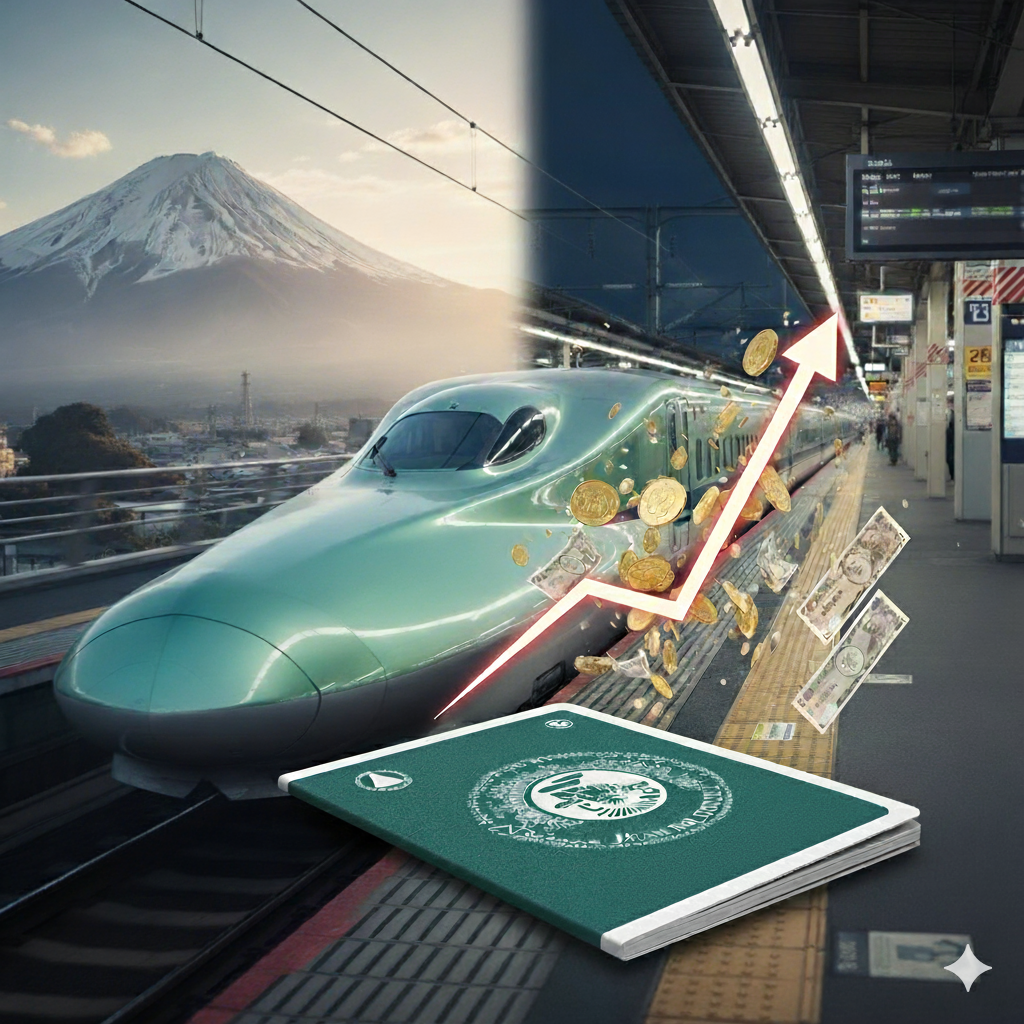
A New Era for Japanese Rail Travel: The Necessary Re-evaluation
The Japan Rail Pass (JR Pass) has long been considered the holy grail for travelers eager to explore Japan extensively using its phenomenal rail network. For years, the pass symbolized efficiency and cost savings, granting unlimited access to the Shinkansen and most other JR lines. However, the winds of change have blown fiercely. With the recent and significant price increase—approximately 70% for the 7-day pass—a major question arises: Is the JR Pass still a cost-effective choice, or has it become a "trap" that no longer meets travelers' expectations? Let's re-examine the current reality.
The Shocking Price Hike: Why the Massive Jump?
The dramatic price increase of the JR Pass caught many—tourists and industry experts alike—by surprise. Several factors are cited as potential reasons:
Inbound Tourism Surge: Japan has experienced a massive boom in international tourism post-pandemic. The price increase may be the JR Group's strategy to manage this overwhelming demand.
Revenue Optimization: Given its unmatched popularity, the JR Pass was likely deemed to have room for significant revenue improvement, especially amidst rising operational costs for the rail network.
Encouraging Regional Exploration: The higher price may indirectly encourage tourists to consider more specific regional passes or purchase individual tickets, which could benefit local economies outside the main tourist corridor.
Regardless of the motive, the implications of this increase are substantial for travelers' planning and budgets.
The Real Cost: A Detailed Case Study
Let's take a common travel scenario to test the effectiveness of the new 7-Day JR Pass, which now costs ¥50,000 (up from the previous ¥29,650).
Typical 7-Day Itinerary:
Day 1: Arrive in Tokyo, travel to Kyoto (Shinkansen: approx. ¥14,000)
Day 2-3: Explore Kyoto (using local non-JR transport)
Day 4: Travel to Osaka (JR local train: approx. ¥600)
Day 5: Explore Osaka, return to Kyoto
Day 6: Day trip to Hiroshima (Shinkansen: approx. ¥11,000 one-way = ¥22,000 Round Trip)
Day 7: Return to Tokyo from Kyoto (Shinkansen: approx. ¥14,000)
Total Estimated Individual Ticket Cost: ¥14,000 (Tokyo-Kyoto) + ¥600 (Kyoto-Osaka) + ¥22,000 (Kyoto-Hiroshima RT) + ¥14,000 (Kyoto-Tokyo) = approximately ¥50,600
In this scenario, the new 7-Day JR Pass at ¥50,000 is only marginally cheaper than buying individual tickets. This calculation demonstrates a critical shift: the Pass no longer guarantees massive savings.
Overlooked Factors: The Surprising Reality
The cost of the JR Pass is not just about the sticker price. Several crucial aspects, often missed by travelers calculating its value, now weigh heavily against it:
1. Now Accessible (with a Fee): The Nozomi Factor: Under the old system, the fastest Shinkansen (Nozomi and Mizuho) were strictly off-limits. However, under the new system (post-October 2023), JR Pass holders can now use the Nozomi and Mizuho trains by purchasing a supplementary "Nozomi/Mizuho Mizuho Ticket" at the station before boarding. While this is an added convenience, it means extra cost and diminishes the simplicity of the pass. You are paying extra for the speed you thought was included.
2. Local City Transport is Excluded: The JR Pass only covers JR lines. Major cities like Tokyo, Kyoto, and Osaka rely heavily on extensive subway and private bus networks that are not operated by JR. You will still need to purchase separate tickets or use an IC card (Suica/Pasmo) for most inner-city travel.
3. Flexibility Over Savings: If your itinerary doesn't involve long-distance, high-mileage travel every day, or if you plan to spend multiple days stationary in one city, buying individual tickets or a regional pass often proves to be significantly more economical.
Alternatives That Might Be a Better Fit
Given the price increase, it is now essential to consider alternatives that better suit your budget and travel style:
Individual Tickets: For popular round-trip routes (like Tokyo-Kyoto RT), buying individual Shinkansen tickets (especially if you can utilize early-bird discounts) offers greater flexibility and often matches the price of the new JR Pass.
Regional Passes: If your focus is on one or two specific regions (e.g., Kansai or Kyushu), regional passes like the JR Kansai Area Pass are often far more cost-effective and provide excellent coverage within their zone.
Domestic Flights: For very long-distance travel (e.g., Tokyo to Hokkaido or Kyushu), Japan’s low-cost carriers often offer highly competitive, time-saving fares that easily beat the cost of the JR Pass.
Night Buses: For budget-conscious backpackers, night buses remain the cheapest option for travel between major cities, saving both money and a night's accommodation cost.
Conclusion: Recalculation is Key
The Japan Rail Pass, post-price hike, is no longer the "one-size-fits-all" solution it once was. For the majority of tourists with itineraries of 7 days or less that don't involve intensive, non-stop long-distance rail travel, buying individual tickets or using a regional pass will likely be the more cost-effective strategy.
The JR Pass still offers value if you commit to extremely heavy, long-distance train travel during the pass's activation period (e.g., Tokyo - Kyoto - Hiroshima - Hokkaido all within 7 days). But for many, the expectation of vast savings may no longer align with the reality of the new price structure. Do your research, calculate your routes carefully, and prepare yourself to find that the real cost may not be what you expected.