
7 Hidden Places in Japan Not Yet Widely Known by Tourists
When hearing the word "Japan," what comes to many people's minds is perhaps the majestic Tokyo Tower, Fushimi Inari Shrine in Kyoto, or the hustle and bustle of Shibuya Crossing. However, behind the modern image and world-famous pop culture, Japan hides another side that is equally enchanting—some of which are places almost hidden from the international tourist radar. This is a Japan that is quieter, more authentic, and full of natural beauty and local traditions that remain largely untouched. If you want to explore the land of cherry blossoms in a different way, these seven hidden destinations could be the start of an unforgettable journey.
1. Tottori Sand Dunes – A Desert in the Land of Snow
Yes, you read that correctly! Japan has a desert! The Tottori Sand Dunes, located in Tottori Prefecture on the coast of the Sea of Japan, are the only natural sand dunes in the country. They stretch about 16 kilometers long and 2 kilometers wide, with dunes that can reach 50 meters in height. This place offers spectacular views, especially during sunrise and sunset. According to 2024 Japan National Tourism Organization (JNTO) data, only about 1.2% of foreign tourists visit Tottori each year, making it an exclusive destination for lovers of quiet natural beauty. Here, you can ride camels, go sandboarding, or visit the Tottori Sand Museum, the only museum in the world that exhibits large-scale sand artworks.
2. Shirakami Sanchi – Virgin Forest in Northern Honshu
On the border of Aomori and Akita Prefectures lies an ancient forest area that seems to take us back to the Earth's past. Shirakami Sanchi, a UNESCO World Heritage site since 1993, is home to a giant beech forest that has grown for over 8,000 years. No paved roads cross its deepest parts, and mobile signals vanish the moment you step into the trees. This area is a habitat for various rare animals such as the Japanese black bear and the golden mountain eagle. Although more than 30 million tourists visit Tohoku annually (2024 JNTO data), only about 0.5% of them reach Shirakami Sanchi. For hikers or nature lovers, this place is a priceless sanctuary of silence.
3. Iya Valley – A Mystical Canyon on Shikoku Island
If you are looking for a place that feels "outside the modern world," then Iya Valley in Tokushima Prefecture is the answer. Located in the heart of the Shikoku mountains, this valley is famous for its ancient suspension bridges made of vines (Kazurabashi Bridge), crystal-clear waterfalls, and thin mists that add a mystical aura in the morning. According to legend, this valley was once a hiding place for the Heike clan who lost the Genpei War (12th century). Although beautiful, access to Iya Valley is quite challenging due to narrow winding roads and limited public transport, keeping it relatively quiet. Based on 2024 Tokushima Tourism Bureau data, only about 180,000 tourists per year visit this area, far fewer than the millions who flock to Kyoto. But perhaps because of that, Iya Valley feels like a secret Japanese world almost unchanged by time.
4. Kanazawa – A Quieter Version of Kyoto
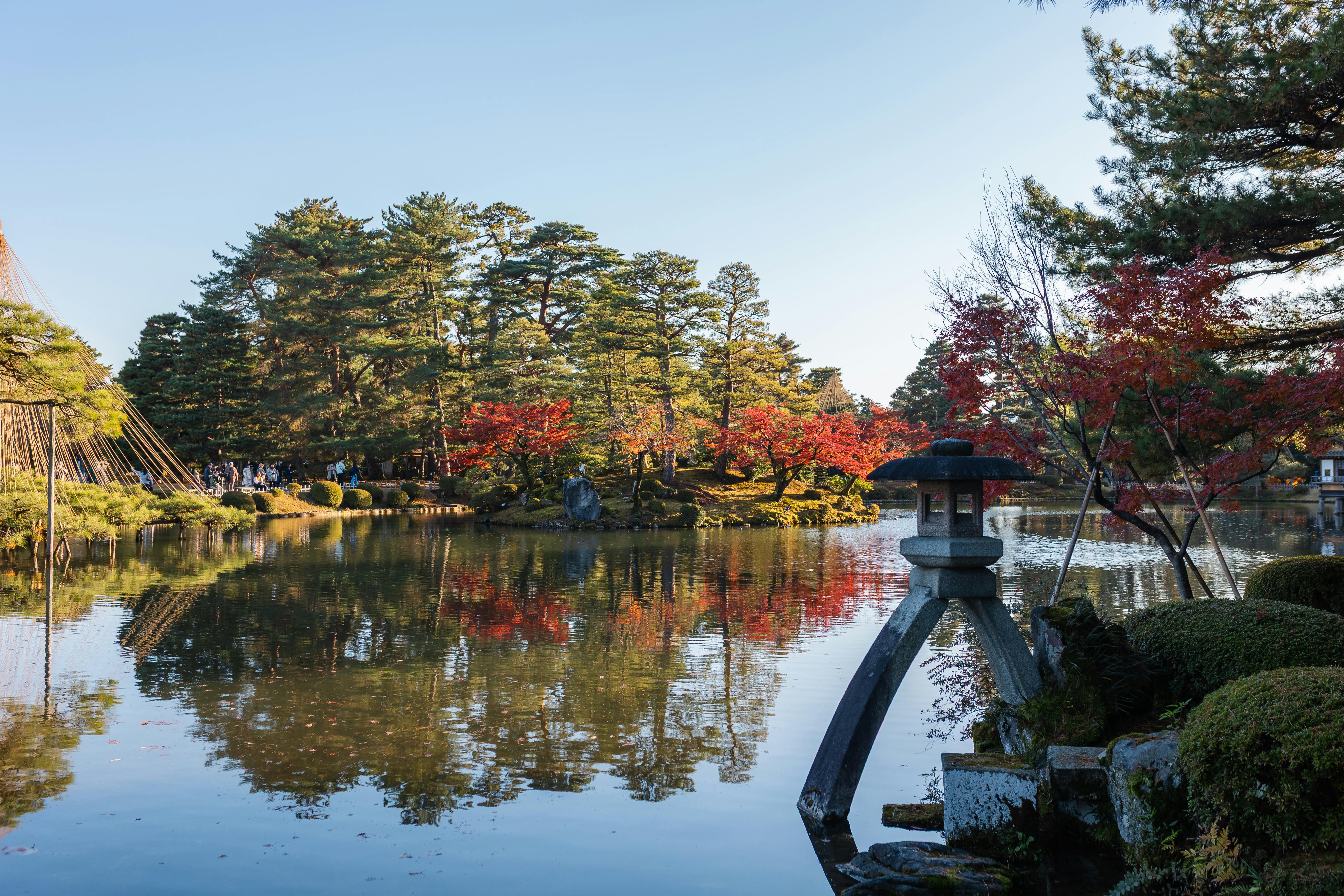
Although it is starting to gain popularity, Kanazawa is still much quieter than Kyoto, even though both offer similar charms: historic temples, tea houses, and classic Japanese gardens. The city is nicknamed "Little Kyoto" because it has successfully preserved the atmosphere of the Edo period extremely well. Here, you can walk through the Higashi Chaya District, rows of geisha houses with traditional wooden architecture, or visit Kenrokuen Garden, often cited as one of the most beautiful gardens in Japan. An interesting fact: Kenrokuen has a 4.8/5 rating from over 25,000 reviews on Google Maps, yet the number of foreign tourists visiting Kanazawa is still below 5% of the total tourists in Japan (JNTO, 2024). So, if you want to enjoy a classic Japanese atmosphere without the crowds, Kanazawa is the perfect choice.
5. Yakushima Island – Island of Spirits and Ancient Trees
South of Kyushu lies an island often cited as the inspiration for Studio Ghibli's legendary film Princess Mononoke: Yakushima Island. This island is famous for its dense subtropical rainforests and giant cedar trees thousands of years old, including Jomon Sugi, which is estimated to be over 7,200 years old! Yakushima was recognized by UNESCO as a World Natural Heritage site in 1993 and is home to more than 1,900 plant species and 16 endemic mammal species. Despite its extraordinary beauty, only about 200,000 tourists visit each year, most of whom are Japanese residents (2024 Yakushima Tourism Report). With hiking trails like Shiratani Unsuikyo, every step feels like walking in a fantasy world.
6. Aogashima – A Volcanic Island in the Middle of the Ocean
Imagine a small volcanic ring-shaped island isolated in the middle of the Philippine Sea, about 350 kilometers from Tokyo. That is Aogashima, a still-active volcanic island inhabited by only about 160 residents. The island is part of the Izu Archipelago and can be reached by a small flight from Hachijojima or a ferry (weather permitting). There are no large hotels or shopping centers, but you can camp near the crater, soak in natural hot springs, and enjoy a starry night without light pollution. Due to difficult access, Aogashima is only visited by about 4,000 tourists per year (2024 Tokyo Islands Travel Data). This makes it one of the most exclusive and hidden destinations in Japan.
7. Kiso Valley – Traces of the Edo Period on the Nakasendo Trail
Finally, let's head to Kiso Valley, a mountainous region in Nagano Prefecture that preserves the history of the ancient Nakasendo trail, the main route between Edo (Tokyo) and Kyoto during the samurai era. Villages like Magome and Tsumago in this valley still maintain wooden buildings with Edo-style architecture without modern billboards. The path winds between pine forests and clear rivers, creating a peaceful atmosphere that seems to transport us back to the 17th century. According to the 2024 Nagano Prefecture Tourism report, the number of tourists to Kiso Valley increased by 18% post-pandemic, but it remains low compared to mainstream destinations, with only about 500,000 tourists per year—far below the 17 million annual visitors to Kyoto. This place is a paradise for those who want to walk through Japanese history in peace.
These seven places show that Japan is not just about neon lights, Shinkansen, and anime. Behind its modern image, the country continues to guard its traditional side and breathtaking wilderness. It is precisely in these hidden places that you can feel "Nihon no kokoro," or the true soul of Japan that is peaceful, simple, and at one with nature. With over 100 million domestic tourist trips every year (2024 Japan Tourism Agency data), there are still many corners of Japan waiting to be explored by those who dare to step off the beaten tourist path. So, if you want to discover another Japan that is quieter, more personal, and authentic, these seven hidden destinations are ready to make you fall in love with the land of cherry blossoms from an unexpected perspective.