Okinawa: Japan’s Tropical Paradise of Culture, History, and Endless Summer
When people think of Japan, they often picture glittering skyscrapers, neon-lit streets, and high-speed trains racing through futuristic cities. Yet beyond the dazzling lights lies another side of Japan—one filled with tropical islands, traditional villages, and a slower, gentler rhythm of life.
Welcome to Okinawa, a subtropical archipelago in southern Japan known for its breathtaking nature, rich cultural heritage, and year-round warm climate. Comprising over 160 islands, Okinawa is divided into three main groups: the Okinawa Islands, the Miyako Islands, and the Yaeyama Islands.
Here, emerald waters meet white-sand beaches, coral reefs teem with marine life, and lush jungles hide sacred sites and waterfalls. It’s a different Japan—one where the air feels softer, the sea warmer, and time moves at its own pace.
A Blend of Nature and History
Beyond its tropical beauty, Okinawa carries a history distinct from mainland Japan. Once home to the Ryukyu Kingdom, the islands thrived as a maritime hub connecting Japan, China, and Southeast Asia. This cosmopolitan past gave rise to a culture rich in diversity—reflected in traditional Ryukyuan architecture, vibrant Eisa dance, the soulful sound of the sanshin(a three-stringed instrument), and flavorful local dishes like goya champuru(stir-fried bitter melon) and Okinawa soba.
Okinawa’s layered history is visible everywhere—from the stately ruins of royal castles to memorial sites honoring those lost during World War II. The region invites travelers not just to relax by the sea, but also to understand the resilience and beauty of its people.
A UNESCO World Heritage Treasure
In July 2021, two areas in Okinawa were inscribed as UNESCO Natural World Heritage Sites, joining the region’s nine Cultural Heritage Sites, most of which are located near Naha Airport on the main island. To truly explore them all, plan for at least two full days.
The heart of Okinawa’s cultural legacy lies in the Ryukyu Kingdom, which flourished from the 15th century and lasted for 450 years. This period—often called Okinawa’s Golden Age—was centered around Shurijo Castle in Naha. When Japan annexed the islands in 1879, the Ryukyu Kingdom came to an end, but its spirit endures in its castles, crafts, and customs.
The Gusuku Sites and Related Properties of the Kingdom of Ryukyu, as registered by UNESCO, include castle ruins, sacred spaces, and royal gardens—each a chapter in Okinawa’s proud history. Exploring these sites feels like walking through living history, where every stone tells a story of trade, faith, and artistry.
Shurijo Castle: The Soul of the Ryukyu Kingdom
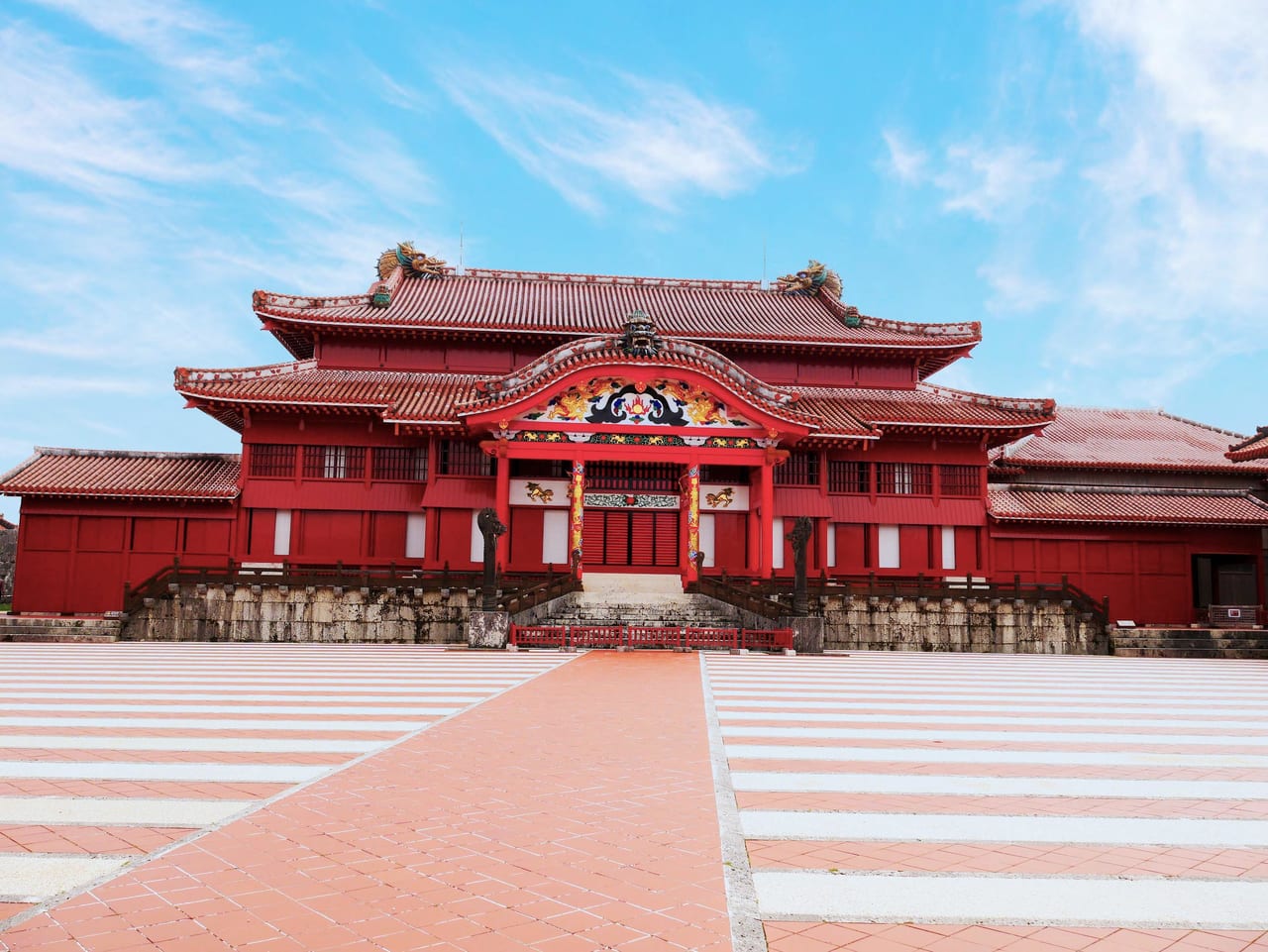
Standing 120 meters above sea level on a hill in Naha, Shurijo Castle was once the royal residence and political center of the Ryukyu Kingdom between the 13th and 19th centuries. Its vermilion walls and dragon motifs reveal the fusion of Japanese, Chinese, and Southeast Asian influences that defined Ryukyuan culture.
Although the original castle was destroyed several times—most notably during World War II—it was beautifully reconstructed in 1992. Tragically, a major fire in 2019 damaged much of the structure once again, but restoration efforts are ongoing, with completion expected in 2026.
Even so, Shurijo Castle remains a must-visit destination. Visitors can explore its gardens, admire the reconstructed halls, and walk along the ancient gusuku(stone fortress) walls. Informational displays in English help bring the castle’s legacy to life for international travelers.
For those arriving from Naha Airport, Shurijo Castle is easy to reach: follow Highway 58 north, turn right at Tomari Takahashi intersection, and continue for about ten minutes until you see the entrance to the Shurijo Castle Park.
Visiting this site feels like stepping back in time—to the height of the Ryukyu Kingdom’s power and grace.
Sefa-Utaki: The Sacred Heart of Okinawa
Among all of Okinawa’s heritage sites, Sefa-Utaki holds a unique place. Revered as the most sacred site on the island, legend tells that this was where the Ryukyu Kingdom began. It is said to be the place where Tedako, the Sun God, sent two deities to create a prosperous land for humankind.
During the 15th and 16th centuries, Sefa-Utaki was the setting for royal rituals and religious ceremonies. In the Ryukyuan belief system, spiritual power was often entrusted to women, and priestesses known as Kikoe Ogimipresided over the sacred rites. Kings also made annual pilgrimages here to pray for good harvests and the well-being of their people.
Today, visitors can walk through the forested site, exploring rock formations, caves, and stone pathways that open toward the shimmering sea. Many say there’s an undeniable spiritual energy here—a sense of calm and connection to the divine that transcends time.
Sefa-Utaki is about 90 minutes by car from Naha Airport. Take Highway 329to Highway 331, pass Azama Sun-Sun Beach, then turn right near Chinen Post Office. Alternatively, take the Toyo Bus and get off at the Sefa-Utaki stop.
A Journey Into Japan’s Southern Soul
Okinawa is more than just a tropical getaway—it’s a bridge between cultures, a land shaped by trade, war, and faith, yet filled with warmth and harmony. Whether you come to dive among coral reefs, wander through castle ruins, or simply feel the island’s gentle breeze, Okinawa offers a glimpse into a Japan that feels both familiar and utterly new.
From sacred Sefa-Utaki to sunlit beaches, every corner of Okinawa whispers the same message: here, tradition and nature live side by side, and the spirit of the Ryukyu Kingdom still watches over the sea.