
Pocket Wi-Fi vs. eSIM: What Works Best for Your Japan Connection in 2025?
Why Fast Internet in Japan is a Non-Negotiable Necessity
Japan is a paradise for any traveler, but it can also be an ultra-modern labyrinth. From navigating the intricate Shinjuku Station to using Google Translate for a menu at a tiny local restaurant, a fast and stable internet connection is no longer a luxury—it's an absolute must-have. By 2025, with 5G technology becoming more prevalent and digital services continually advancing, your options for staying connected are more diverse than ever: Will you stick with the time-tested Pocket Wi-Fi, or make the leap to the revolutionary eSIM? Let's break it down thoroughly.
The Old School Side: Strengths and Weaknesses of Pocket Wi-Fi
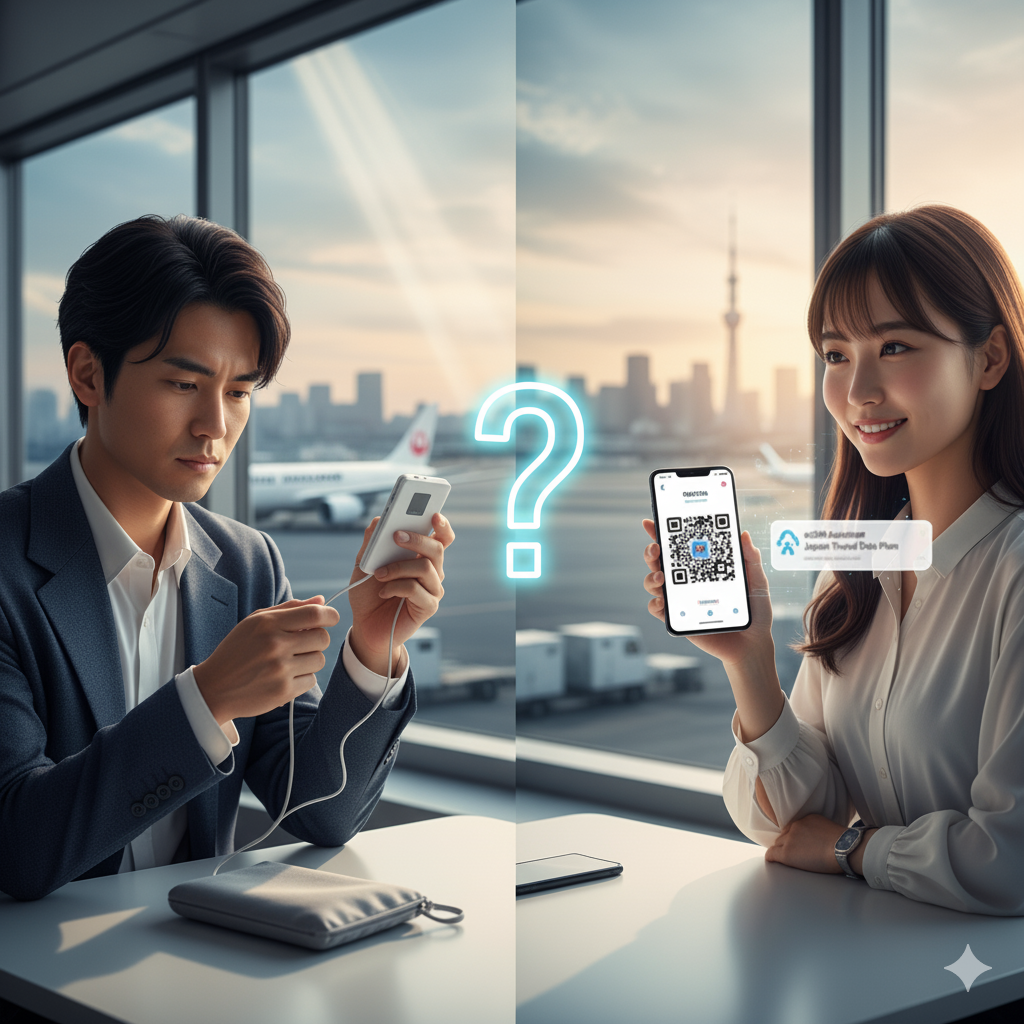
Pocket Wi-Fi has long been the classic choice. This small device acts as a personal mobile hotspot that you can carry anywhere, allowing multiple devices (phones, tablets, laptops) to connect simultaneously to a single network.
Advantages of Pocket Wi-Fi:
Effortless Sharing: It's the undisputed champion if you're traveling in a group or with family. You only need to rent one unit to keep everyone connected.
Independent Battery Life: The device has its own battery, which means it won't drain your main phone's battery (except when charging the Pocket Wi-Fi itself).
Stable Connection: Pocket Wi-Fi devices typically utilize the best chips and strongest signals available, guaranteeing a very reliable connection.
Disadvantages of Pocket Wi-Fi:
Physical Burden: You have to carry an extra device, its charging cable, and remember to charge it every night. Forgetting to do so means no connection for the day.
Logistical Hassle: The rental and return process can be cumbersome. You'll likely queue at the airport for pickup and drop-off, and there's a significant risk of fines for losing the unit.
Group Dependency: If you get separated from your group, you lose your internet connection.
The Modern Side: Convenience and Limitations of eSIM
eSIM (embedded SIM) is the latest technology that eliminates the need for a physical SIM card. You simply scan a QR code sent via email, and within seconds, your phone connects to Japan's local network.
Advantages of eSIM (Highly Relevant for 2025):
Zero Portability Burden: No extra device, no cables, no queuing. Activation is instant and entirely digital. The moment you land at Narita or Haneda, boom, you're connected.
Battery Efficiency: As there's no external hotspot connection actively drawing power, many users report that eSIMs are more battery-friendly than Pocket Wi-Fi.
Keep Your Main Number Active: Your physical SIM card (your home number) remains active. This is crucial for receiving SMS OTPs or important calls while your data runs using the eSIM.
Flexible Plans: Many providers offer highly flexible plans (ranging from 3-day, 7-day, to 30-day options) with transparent quotas and pricing.
Disadvantages of eSIM:
Device Limitation: Each individual typically needs to purchase their own eSIM plan, as eSIM connections are generally more difficult to tether to multiple devices.
Compatibility Check: While most modern smartphones (iPhone XS and newer, Samsung Galaxy S20 and newer, and Google Pixel 3 and newer) are compatible, it's essential to check your device's compatibility before purchasing.
The 2025 Verdict: Who Wins?
The best choice in 2025 largely depends on your travel style. If you're a solo traveler or traveling as a couple, making the switch to an eSIM will revolutionize your travel convenience in Japan. It's truly the smarter, modern way to stay connected, ensuring every moment of your adventure runs smoothly without digital hiccups.