Japanese Train Transfers That Confuse Even Seasoned Travelers
The Japanese Rail Maze: Why Efficiency Often Leads to Confusion
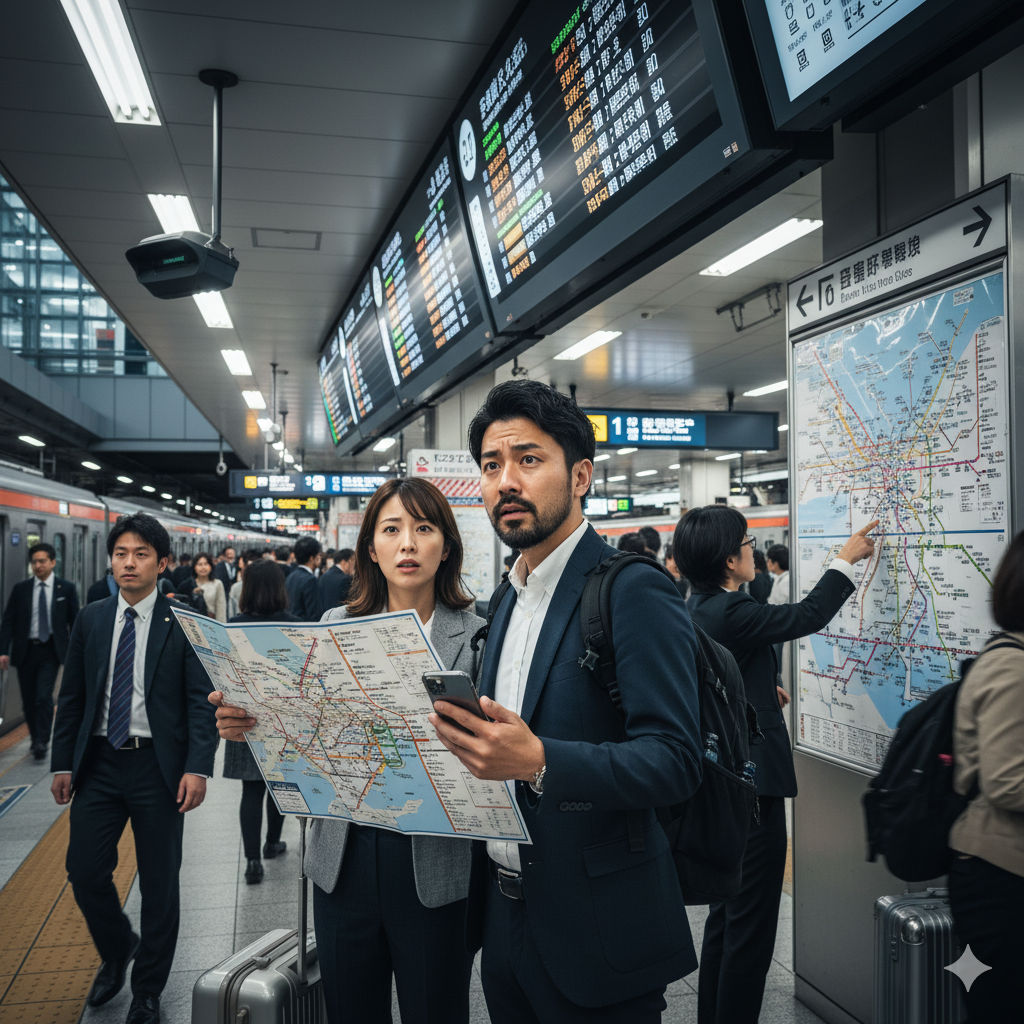
Japan's rail system is known globally for its efficiency, punctuality, and extensive network. However, for travelers, both novice and experienced, there are times when this excessive efficiency turns into overwhelming confusion. This problem most frequently arises during transfers at major stations involving switching between lines, switching between operating companies, or even navigating different levels and floors.
In Tokyo and Osaka, some transfer stations are designed as true labyrinths of concrete and steel. Here are the most confusing rail transfer points in Japan and tips on how to navigate them successfully.
The Most Confusing Transfer Points (The Big Three)
1. Shinjuku Station (Tokyo): The World’s Transfer Monster
Shinjuku Station is not only the busiest station in Japan but also in the world. The complex serves over 3.5 million passengers per day and is the meeting point for various rail and subway companies.
The Confusion Problem: The station has over 200 Exits, with JR lines running on the surface, private lines (like Keio and Odakyu) located underground, and connections to the Tokyo Metro (Marunouchi Line) often located far away. Transferring from a JR line to a private subway line can take 15 to 20 minutes of walking underground, through branching and confusing corridors.
The Fatal Example: Attempting to transfer from the JR Yamanote Line to the Oedo Subway Line, or searching for the Southern Terrace Exit amidst the bustling shopping complex.
2. Tokyo Station: The Subtle Difference Between JR and Subway
While not as massive as Shinjuku, Tokyo Station is confusing due to its clear division between the "east side" (Yaesu) and the "west side" (Marunouchi), and its integrated Shinkansen terminal.
The Confusion Problem: The stark difference between the surface JR lines (like Yamanote) and the Sōbu/Yokosuka Lines located deep underground. The biggest confusion arises when tourists need to transfer from the Shinkansen to the Tokyo Metro Marunouchi Line. Although they look close on a map, you must exit the JR ticket gates, walk through the extensive station commercial area, and re-enter through the Tokyo Metro gates.
The Fatal Example: Searching for the Tokyo Metro gate inside the JR Shinkansen gate area and realizing you have to exit and pay again.
3. Umeda / Osaka-Umeda Station (Osaka): The Dual Identity Dilemma
In Osaka, the Umeda district is a busy commercial hub, and its station complex is a logistical nightmare. The problem is not just the size, but the multiple station identities located adjacent to each other: JR Osaka Station, Hankyu Umeda Station, Hanshin Umeda Station, Osaka Metro Umeda Station, Higashi-Umeda, and Nishi-Umeda.
The Confusion Problem: Although these six stations are interconnected underground, the differing names mean you must pass through different ticket gates (often belonging to different companies) and walk through long, poorly marked underground passages. Transfers between private stations like Hankyu and Hanshin are often easier than transferring from JR to the Osaka Metro subway.
The Fatal Example: Mistakenly taking the Hankyu line when you should have taken the JR line, and ending up at the wrong destination entirely.
Tactics to Conquer the Rail Maze
To avoid stress and losing time during transfers at these monster stations, follow these tactics:
1. Utilize Advanced Transit Apps: Always use Google Maps or Japan Transit Planner (Hyperdia is now less popular). These apps not only tell you which line to take, but most importantly, they show the Platform Number and the transfer time required.
2. Memorize Line Names and Colors: In stations like Shinjuku, focus on the color and letter code of your line. Don't just look for a "Subway" sign; look for "Tokyo Metro M (Marunouchi Line)" or "Toei O (Oedo Line)."
3. Exit and Re-Enter (Don't Be Afraid): In stations involving inter-company transfers (e.g., from JR to Keio/Odakyu in Shinjuku, or JR to Tokyo Metro at Tokyo Station), often the quickest and easiest way is to exit the first company's ticket gates, walk, and then re-enter through the second company's ticket gates using your IC card (Suica/Pasmo).
4. Follow the Correct Exit Signs: Before transferring, know which Exit is closest to your connecting line. Major stations often have clear signs towards connecting lines, but reading the overall station map remains important.
5. Add Extra Buffer Time: In stations like Shinjuku or Umeda, always allocate 15–20 minutes of transfer time in your itinerary, even if the app says it only takes 5 minutes. Getting lost just once can add 10 extra minutes.
With a little planning and smart use of transit apps, the Japanese station labyrinth will no longer be a source of dread, but simply a part of the country's unique efficiency.