The Real Reason Tokyo Hotel Rooms Feel So Tiny
Tokyo: A Giant City with Miniature Spaces
Tokyo is one of the largest and most densely populated cities in the world, a megapolis that blends ancient tradition with futuristic technology. Yet, amidst the dazzling skyscrapers and the vast rail network, there is one reality that often surprises tourists: hotel rooms that feel incredibly, undeniably tiny. From business hotels to capsule hotels, this limited space is not a mere coincidence but the result of a complex combination of economic, cultural, and geographical factors.
So, why do Tokyo hotel rooms feel so small? Let's delve into the real reasons behind this phenomenon.
The Main Factors Behind Tiny Hotel Room Sizes
1. Astronomical Land Prices (Economics & Geography)
This is the dominant factor. Tokyo has some of the most expensive real estate in the world, especially in central districts like Shinjuku, Shibuya, or Ginza. Every square meter is a highly valuable investment.
Implication: To maximize profit and keep room prices "affordable" for the majority, hotel operators must compromise on room size. Building smaller rooms means they can fit more units into a single building, thus increasing capacity and revenue per land footprint.
2. Focus on Efficiency & Functionality (Culture & Design)
Japanese design philosophy strongly emphasizes efficiency, functionality, and clever use of space (minimalism). Rather than vast spaces, the focus is on ensuring every inch of space serves a purpose.
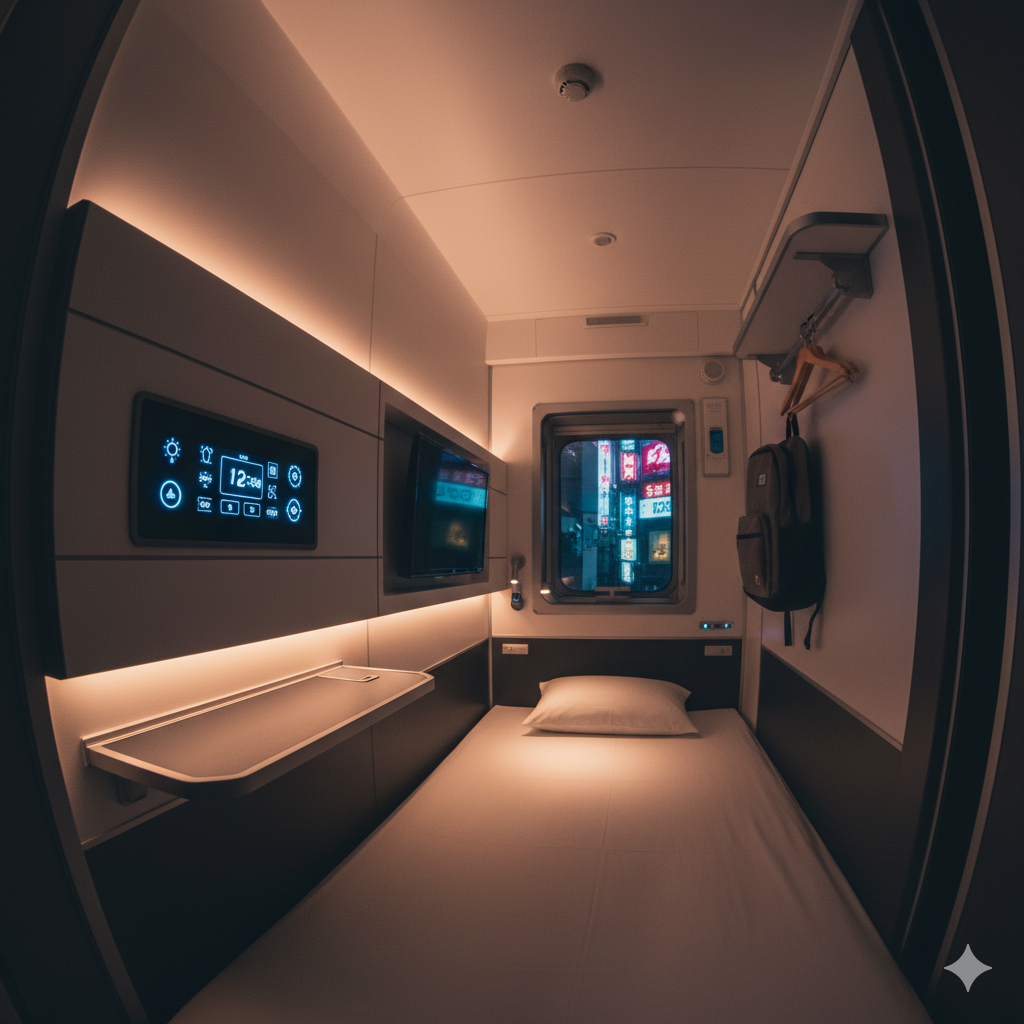
Implication: Hotel rooms are designed with remarkable ingenuity. Fold-out desks, hidden drawers, compact unit baths, and perfectly sized beds—all are engineered to provide all the basic necessities without wasting space. To Japanese designers, a small, functional space is valued more than a large, inefficient one.
3. The Hotel’s Role as a "Night's Sleep" (Lifestyle)
For many Japanese people, especially salarymen traveling for business or locals attending city events, the hotel is often considered merely a place to sleep overnight. The majority of time is spent outside: working, exploring the city, or socializing.
Implication: Since the room is not meant for lingering, the need for large living spaces or expansive lounging areas is minimal. The priority shifts to strategic location and competitive pricing.
4. High Demand and Population Density (Demographics)
Tokyo is home to tens of millions of people and attracts millions of tourists annually. The extreme population density and the continuously increasing demand for accommodation put immense pressure on space availability.
Implication: Limited land availability and high demand drive the construction of hotels with smaller rooms to accommodate as many guests as possible. If hotels offered larger rooms, the prices would be prohibitively expensive and likely inaccessible to the broader market.
5. Fierce Competition in the Hospitality Industry
The hospitality industry in Tokyo is fiercely competitive. Hotels strive to attract guests by offering the best prices, prime locations, or modern amenities.
Implication: One way to remain competitive is by managing operational costs, including land leasing expenses. With smaller rooms, they can offer more attractive prices compared to hotels with larger rooms in equivalent locations.
How to Adjust to Tiny Tokyo Hotel Rooms
Pack Lightly: Avoid bringing unnecessarily large suitcases.
Use Vertical Storage: Maximize use of hanging space, small shelves, or the space under the bed.
Prioritize Location: A small room in a strategic location is often more valuable than a large room in a remote area.
Book Newer Business or Capsule Hotels: Some of these hotels are highly adept at utilizing space, offering modern technology and comfort in a compact package.
Conclusion: Tiny Yet Efficient
The tiny hotel room in Tokyo is not a sign of lacking luxury or service, but a reflection of the city's unique dynamics: extraordinary land costs, a culture of efficiency, an active lifestyle outside the hotel, and high demand. Understanding the reasons behind this room size can help you adjust your expectations and better appreciate the design ingenuity that allows Tokyo to house so many people in efficient harmony. Enjoy the magnificent city of Tokyo, even if you are sleeping in a compact space!